
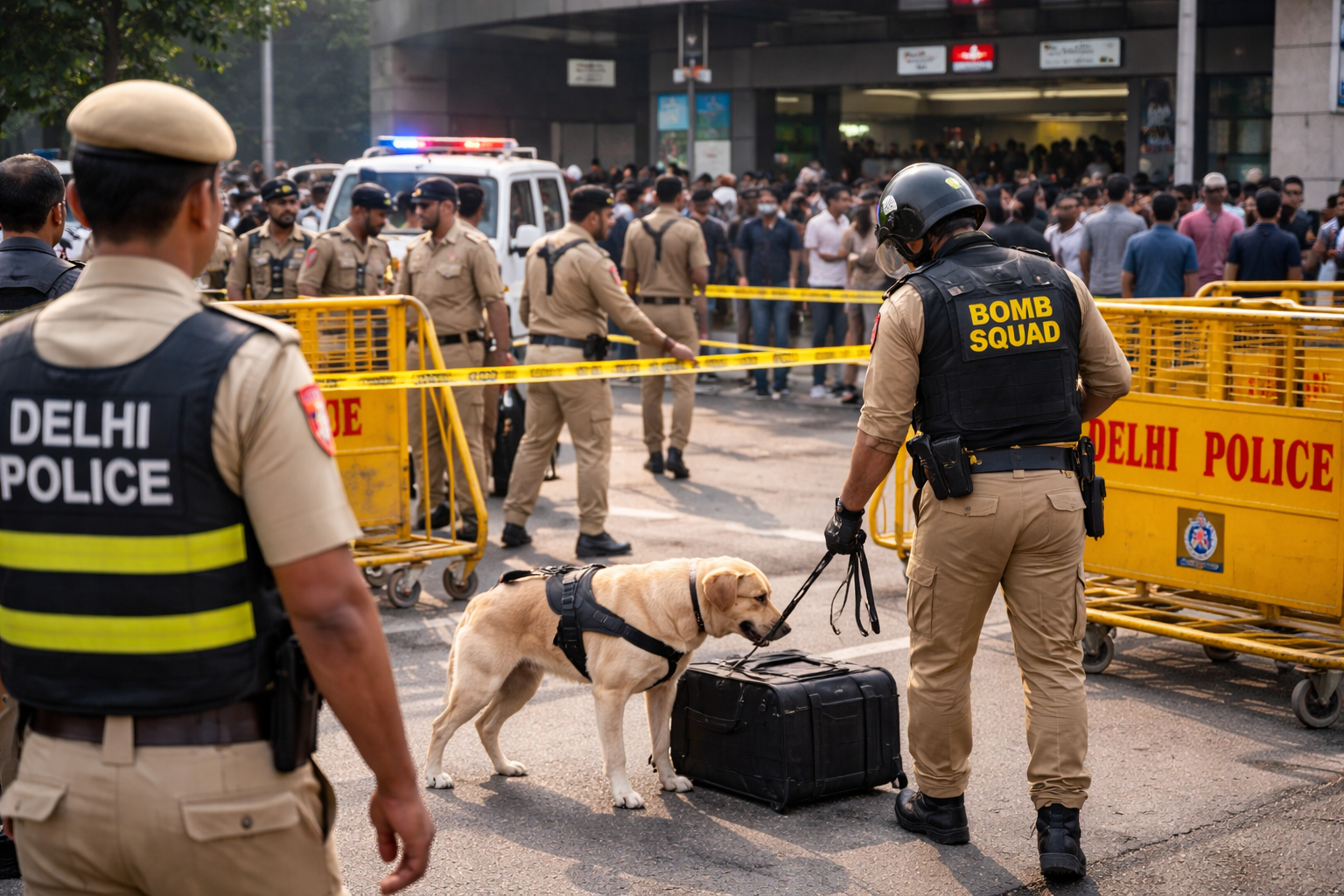
On 9 February 2026, a Bomb Threat connected to locations in Delhi led to a temporary security alert across parts of the city. Whenever such a warning is received, officials act immediately, even before all details are confirmed. This careful method helps protect residents and visitors while trained teams check the situation.
This article explains the incident in simple language. It focuses on what usually happens during a threat alert, how authorities respond, and how people can stay calm and informed. The goal is to provide clear guidance without repeating rumors or creating panic.
Table of Contents
How the Alert Came to Attention
The Bomb Threat was reported earlier in the day, which prompted authorities to begin their standard safety procedure. When any message or report suggests a possible explosive risk, it is handled as urgent. Teams do not wait for full confirmation. Instead, they secure the area and begin checks right away.
Security personnel moved to the locations connected with the alert and began scanning surroundings. In many cases, people nearby are asked to remain patient or change routes for a short time. These steps are preventive and designed to reduce any possible danger.
Schools that received the threats include:
- Bal Bharati School, Rohini
- Loreto Convent School, Delhi Cantt
- Cambridge School, Srinivasanpuri
- Venkateshwar School, Rohini
- Cambridge School, New Friends Colony
- The Indian School, Sadiq Nagar
- CM School, Rohini
- DTA School, INA
Immediate Steps Taken by Officials
After receiving the Bomb Threat information, police units and specialized teams reached the area quickly. Their first task was to examine the reported location carefully and make sure the public remained safe.
Typical actions during such alerts include:
- Inspecting buildings and open spaces
- Controlling entry and exit points
- Guiding crowds to safer zones
- Checking vehicles and bags
- Staying ready for emergency support
Officials also coordinate with different departments so that medical help and fire services are available if needed. Even if a threat later turns out to be false, every alert is treated with seriousness.
Effect on Daily Activities
A Bomb Threat can briefly affect normal routines. On February 9, 2026, some areas of Delhi saw extra checking and controlled movement. Public transport hubs, busy streets, and office zones often receive additional monitoring during such times.
Commuters might face delays while security teams complete their inspection. Shops and offices in nearby areas may remain cautious until authorities confirm that everything is safe. These actions are temporary and aimed at prevention.
Importance of Public Cooperation
Public cooperation plays a big role when a Bomb Threat is reported. Security teams work faster when people remain calm and follow instructions. Panic or crowding can slow down the response and create confusion.
Residents can help by:
- Listening to official announcements
- Avoiding restricted areas
- Reporting suspicious objects
- Staying patient during checks
- Sharing only confirmed information
These small steps support emergency teams and help maintain order.
Staying Informed Without Spreading Fear
During a Bomb Threat, information spreads quickly online. However, not all updates are accurate. It is important to rely on official statements from trusted sources. Sharing unverified messages can create unnecessary stress.
Checking reliable news channels or government updates ensures that people receive correct information. Responsible sharing helps keep the situation under control and prevents misunderstanding.
Why Preparedness Matters
Large cities prepare for emergency situations through training and planning. When a Bomb Threat is reported, different departments already know their roles. This planning allows them to respond in an organized way.
Preparedness includes:
- Regular safety drills
- Clear communication systems
- Coordination between teams
- Emergency medical readiness
Because of this preparation, authorities can act quickly and protect the public more effectively.
A Reminder About Awareness
Events like the Bomb Threat alert on 9 February 2026 remind people to stay aware but not fearful. Most alerts are handled carefully and resolved without harm. The key is to remain calm and cooperative while checks are completed.
Understanding basic safety behavior helps everyone respond better during unexpected situations. Awareness and patience are useful tools during any citywide alert.
Conclusion
The Bomb Threat reported in Delhi on 9 February 2026 led to a prompt response from security teams and a short period of increased alert. Authorities followed safety procedures to check the situation and protect residents.
While such incidents can cause concern, clear communication and public cooperation help manage them smoothly. Staying calm, relying on verified information, and following instructions are the best ways to stay safe during any alert.
FAQs
1. What should I do if there is a Bomb Threat near me?
Stay calm, follow official instructions, and move away from restricted areas if advised.
2. Why do authorities take every threat seriously?
Even a small risk must be checked carefully to ensure public safety.
3. Can public transport be affected during such alerts?
Yes, there may be short delays while security checks are completed.
4. How can people help during a threat alert?
By staying patient, reporting suspicious activity, and avoiding rumor sharing.
5. Do all bomb threats turn out to be real?
Many are precautionary alerts, but each one must be checked thoroughly to keep people safe.
For more updates stay connected with khabarmanufacturing24x7.com