
Introduction
India follows many calendars at the same time. Some festivals are solar-based. Others follow the moon. Because of this, Indian Holidays 2026 include fixed dates as well as flexible ones.
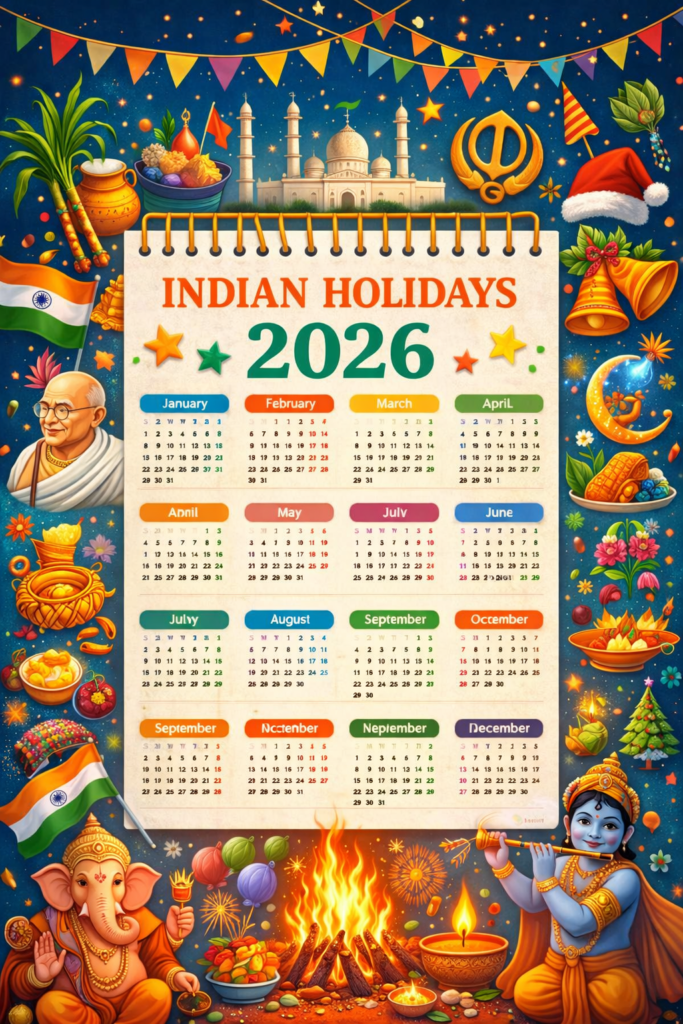
Holidays in India are not only about rest. They exist to remember history, express faith, respect nature, and keep traditions alive. Some holidays are celebrated everywhere. Others are meaningful only in certain regions.
This guide explains Indian holidays in 2026 in clear language, without complicated cultural terms.
Table of Contents
How Indian Holidays Are Classified
Indian holidays are not all the same. They fall into different groups based on purpose.
National Holidays
These are observed across the entire country. Offices, schools, and banks usually remain closed.
- Republic Day
- Independence Day
- Gandhi Jayanti
These days reflect India’s political identity and shared values.
Public and Gazetted Holidays
These holidays are approved by government authorities. Some apply nationwide, while others depend on state rules.
Religious Holidays
India follows many religions. Each religion has festivals based on belief, prayer, or spiritual events. These holidays are respected across communities, even if not everyone celebrates them.
Regional and Cultural Holidays
Some holidays belong to specific regions. These are often linked to farming cycles, local history, or language-based traditions.
Indian Holidays 2026: Month-by-Month Overview
January
The year begins with calm and reflection.
- New Year’s Day marks a fresh start.
- Lohri celebrates warmth and harvest in northern states.
- Makar Sankranti and Pongal focus on the sun and agriculture.
- Republic Day honors the Constitution and democratic structure.
February
This month welcomes learning and spiritual focus.
- Vasant Panchami encourages education and creativity.
- Maha Shivratri is dedicated to inner discipline and devotion.
March
Colors and faith define this month.
- Holi celebrates joy, forgiveness, and social unity.
- Ramadan begins, emphasizing patience and self-control.
April
This period connects belief with moral values.
- Ram Navami reflects duty and honesty.
- Mahavir Jayanti promotes peace and non-violence.
- Good Friday is observed with prayer and silence.
May
Gratitude becomes the central theme.
- Eid al-Fitr focuses on sharing and compassion.
- Buddha Purnima highlights calm thinking and kindness.
June
June has fewer major holidays. It is often used for travel or academic activities.
July
Reflection and remembrance continue.
- Muharram marks the Islamic New Year and carries emotional significance.
August
Patriotism and family bonds take priority.
- Independence Day celebrates freedom and sacrifice.
- Raksha Bandhan honors sibling relationships.
- Janmashtami represents wisdom and divine love.
September
Celebrations turn grand and public.
- Ganesh Chaturthi focuses on new beginnings and hope.
October
This month balances history and belief.
- Gandhi Jayanti reminds people of peaceful leadership.
- Navratri highlights strength and devotion.
- Dussehra symbolizes moral victory.
November
Light and gratitude dominate.
- Diwali celebrates renewal and positivity.
- Bhai Dooj strengthens family bonds.
- Guru Nanak Jayanti promotes equality and service.
December
The year closes with warmth and generosity.
- Christmas spreads messages of love and goodwill.
Why Indian Holidays Matter
Indian holidays protect traditions from disappearing. They give meaning to shared values. They also provide emotional rest.
In 2026, holidays will continue to bring families together, whether through rituals, meals, or simple time spent together.
Indian Holidays and Daily Life
Holidays influence travel plans, school calendars, and office schedules. Many people also use them to reflect on personal goals or reconnect with loved ones.
They are not just breaks. They are cultural pauses.
Frequently Asked Questions
Q1. How many holidays are officially recognized in India?
India has three national holidays and several public and regional holidays.
Q2. Do holiday dates change every year?
Yes. Many festivals follow lunar calendars.
Q3. Are all festivals government holidays?
No. Some are optional or restricted.
Q4. Do banks close on all festivals?
Banks follow state and national holiday rules.
Q5. Why are regional holidays important?
They protect local identity and traditions.
Final Thoughts
Indian Holidays 2026 reflect how history, belief, and daily life connect in India. Each holiday has a reason. Each celebration carries meaning beyond the date.
Understanding these holidays helps people appreciate India’s cultural depth and plan their year wisely.
For more updates stay connected with khabarmanufacturing24x7.com